How to prepare an RFP for MDM software.
An RFP (Request for Proposal) is a formal document used by companies to request detailed information and proposals from vendors regarding…
An RFP (Request for Proposal) is a formal document used by companies to request detailed information and proposals from vendors regarding products, services or solutions they are looking to acquire.
In the context of choosing an MDM (Master Data Management) software, an RFP is an essential tool for clearly communicating requirements, expectations and evaluation criteria to potential vendors.
What is master data?
First of all, let's quickly recall what master data is: fundamental, essential information that describes crucial elements of an organization, such as customers, suppliers, products and other relevant assets.
This data plays a central role in a company's operations, serving as the foundation for business processes, analytics, decision-making and interactions with customers and partners.
Unlike transactional data, which is associated with specific day-to-day activities, master data is more permanent and comprehensive in nature, representing essential information used across the entire organization.
Why does a company need an MDM software?
A company needs an MDM (Master Data Management) software to centralize, organize and optimize the management of its master data, such as information on customers, suppliers, products and other elements essential to its operations. Here are some key reasons:
- Data Quality: An MDM software ensures the consistency, accuracy and integrity of master data. This prevents errors, rework and misguided decision-making caused by incorrect information.
- Single, Integrated View: By centralizing master data in a single trusted source, MDM software creates a complete, integrated view of information across the entire organization, eliminating duplications and discrepancies.
- Accurate Decision-Making: Accurate, up-to-date master data is crucial for strategic decisions. MDM provides reliable information for analysis, planning and accurate insights.
- Operational Efficiency: Manual or decentralized data management can be time-consuming and error-prone. MDM software automates processes, saving time and resources.
- Regulatory Compliance: Many industries have specific regulations on data quality and security. MDM helps maintain compliance, avoiding fines and legal issues.
- Innovation and Agility: With consistent, reliable data, the company can respond quickly to market changes, launch products more efficiently and adopt technological innovations.
- Customer Experience: Accurate master data is essential to deliver a consistent, personalized experience to customers, improving satisfaction and loyalty.
- Cost Reduction: By preventing errors and rework, optimizing processes and reducing inefficiencies, an MDM software contributes to lowering operating costs.
- Migrations and Integrations: During system migrations or company mergers, MDM makes data integration efficient and accurate.
- Scalable Growth: As the company grows, manual data management becomes unsustainable. MDM provides a solid foundation for scalability.
In short, an MDM software is essential to ensure that the company's master data is reliable, consistent and well managed, driving operational efficiency, smart decision-making and customer satisfaction.
Why structure an RFP?
Putting together an RFP when choosing an MDM software is crucial for several reasons:
- Requirements Specification: A detailed RFP allows the company to clearly define its needs and expectations regarding the software. This helps vendors understand what matters and tailor their proposals accordingly.
- Fair Comparison: It allows all vendors to be evaluated fairly and equally, since they are all responding to the same specifications and criteria.
- More Accurate Evaluation: By receiving proposals from different vendors, the company can assess and compare offers based on objective, specific criteria.
- Informed Decision-Making: The RFP provides a clear view of the capabilities and features of the different MDM software options, allowing the company to make a more informed decision aligned with its needs.
- More Efficient Negotiations: It establishes the initial parameters for negotiations. Based on the proposal responses, the company can start more detailed discussions with vendors.
- Risk Reduction: By defining clear requirements from the outset, the company can avoid purchases that do not meet its needs or that lead to future problems.
- Time and Resource Savings: The RFP helps avoid wasting time evaluating offers that are not aligned with the company's requirements.
Essential Points in an RFP.
Defining the scope of an RFP (Request for Proposal) clearly and comprehensively is essential to ensure that vendors fully understand the company's needs and expectations. Here are some steps to define the scope:
- Identify Objectives and Needs: Start by identifying the objectives of acquiring the MDM software and the company's specific needs. What problems do you expect to solve? Which processes need to be optimized? This will help define the context of the RFP.
- Outline Required Functionalities: List the essential functionalities and features the MDM software must have to meet the company's needs. This may include data management, integration, security, automation, reporting, etc.
- Determine Geographic and User Scope: Specify whether the implementation scope covers a specific geographic region, business units or departments. This helps define the scale of the solution.
- Identify Relevant Master Data: List the types of master data that will be managed by the software (customers, suppliers, products, etc.) and the specific attributes that are relevant to the company.
- Establish Integration Requirements: If the MDM software needs to integrate with other systems (such as ERP, CRM, etc.), specify the integration requirements, data formats and protocols.
- Define Processes and Workflows: Describe the business processes the software must support, including workflows, approvals and required automations.
- Specify Reporting and Analytics Needs: Indicate the types of reports and analyses the company needs to generate from master data, to ensure the software offers the necessary functionalities.
- Establish Evaluation Criteria: Define the criteria by which vendor proposals will be evaluated. This may include technical aspects, cost, support, vendor experience, etc.
- Include Budget Limits and Timeline: If possible, provide an estimated budget cap for the acquisition and implementation of the software. Also, specify important deadlines, such as proposal submission dates, project start, etc.
- Provide Business Context: Include information about the company's industry, its business strategy and any relevant context vendors need to know.
Criteria to be evaluated in an RFP?
Below is a suggestion with some fundamental points to be evaluated in a master data management solution. A score of 1 is considered poor and a score of 5 excellent.
| Functionality / Criterion | Vendor A | Vendor B | Vendor C |
| Data Management | |||
| Data Quality | 4 | 5 | 3 |
| Data Source Integration | 4 | 3 | 5 |
| Standardization and Normalization | 5 | 4 | 4 |
| Advanced Functionalities | |||
| Deduplication and Unification | 5 | 4 | 3 |
| Access Control and Security | 4 | 5 | 4 |
| Customizable Workflow | 3 | 5 | 3 |
| Integration with Systems | |||
| ERP Compatibility | 5 | 3 | 4 |
| CRM Integration | 4 | 5 | 3 |
| Support and Training | |||
| Responsive Technical Support | 5 | 4 | 3 |
| Customized Training | 4 | 3 | 5 |
| Scalability | |||
| Adaptation to Growth | 5 | 5 | 4 |
| Price | |||
| Total Cost | 3 | 4 | 5 |
Comparison table.
This comparison table presents a simplified view of the functionalities and criteria relevant to consider when evaluating different MDM software vendors.
Keep in mind that the importance of each functionality may vary according to your company's specific needs. Use this table as a guide to make an informed decision when comparing offers.
EVALUATION TABLE.
Below is an illustrative table with important points that should be checked and compared across vendors.
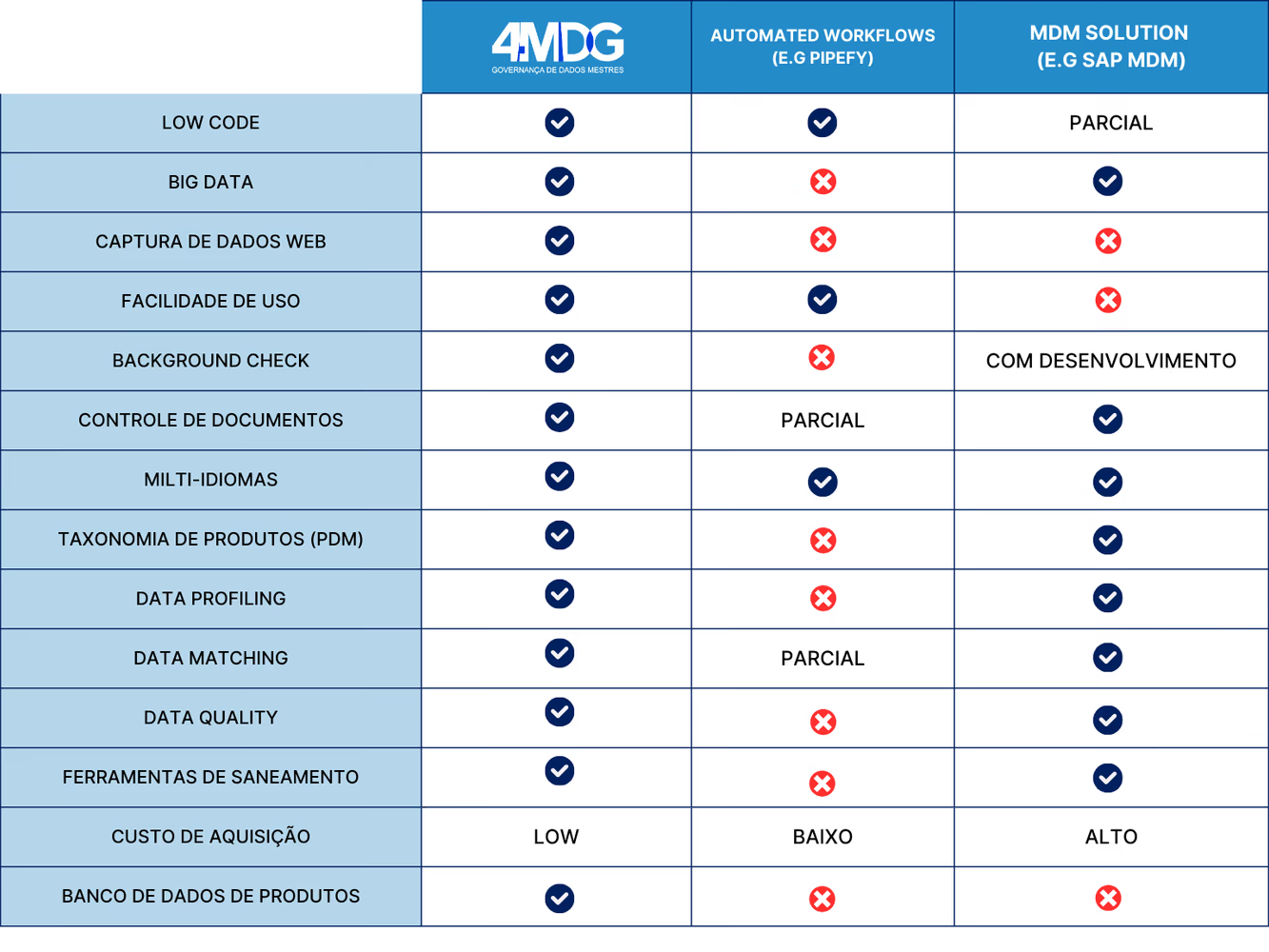
In addition to the points mentioned above, it is recommended to evaluate the following characteristics:
Data Quality:
- Data cleansing, standardization and enrichment capabilities.
- Methods to ensure the consistency and integrity of master data.
Integration and Connectivity:
- Ease of integration with existing systems, such as ERPs and CRMs.
- Support for different data formats and communication protocols.
Flexibility and Customization:
- Ability to customize fields, workflows and business rules.
- Adaptation to the organization's specific needs.
Access Management and Security:
- Access controls for different users and roles.
- Security protocols to protect sensitive data.
Scalability and Performance:
- Ability to handle growing volumes of data and users.
- Response time and performance in high-traffic environments.
Support and Training:
- Availability of technical support and updates.
- Training offered for users and administrators.
Workflows and Automation:
- Functionalities to define and automate workflows.
- Notifications, approvals and collaboration processes.
Analytics and Reporting:
- Ability to create custom analyses and reports.
- Data visualization and insight generation.
Adoption and Usability:
- User-friendly and intuitive interface for users.
- Usability features that facilitate system adoption.
Total Cost of Ownership:
- Initial cost and licensing.
- Ongoing costs, such as maintenance, updates and support.
Experience and References:
- Vendor experience in similar projects.
- References from customers who have implemented the software.
Updates and Innovations:
- Software update and continuous development policies.
- Ability to stay up to date with technological changes.
WATCH THE DEMO:
Get a free assessment of your customer, product and supplier records by clicking here and find out how to eliminate duplicates and generic data.
That's it! Good business!
Want to learn everything about master data records? Follow us on Instagram @4mdg_.
Service and Software Portfolio from 4MDG: supplier and customer portals, automated background checks, custom workflows, process automation, record standardization and cleansing.
Join one of the largest groups of lead management specialists. Share ideas, share experiences, see job openings and learn more from the best Master Data Analysts in Brazil.
Click here to join the group: https://www.linkedin.com/groups/12272684/