
ADAM · AI assistant for master data
ADAM: the AI assistant that fills in, standardizes and classifies your records.
You describe the item, look up a company in public registry databases or ask a question. ADAM completes the fields, writes the description in your company's standard, suggests product classification and UNSPSC codes, locates the customer or supplier and returns everything ready for you to review and approve. Inside the 4MDG platform, with no copying and pasting between systems.
160 clients trust us












The problem
Master data is still people typing, searching and guessing.
A new item arrives as free text in an email. Someone looks up the product classification online, picks the unit of measure by guesswork, checks whether the supplier already exists by scanning list after list, and types the description however it comes out. By the end of the day, each person has registered it a different way.
The result is duplicates, descriptions no one can find in a search, wrong tax classification and purchases stuck waiting on registration. The bottleneck is not a lack of people. It is repetitive work that an AI does better and faster, with you making the final call.
What it does for you
An assistant for every step of registration.
ADAM works across materials, services, customers and suppliers. You ask, it executes, you confirm.
Fills in and completes fields
From a loose description, a code or a document, ADAM fills in the mandatory fields and suggests the optional ones: group, unit of measure, material type, technical attributes, tax data. Whatever it is unsure about, it flags for you to decide.
Finds customers and suppliers
Enter a company identifier, a name or part of the address. ADAM queries public registry databases, returns the legal name, address, registration status and tax regime, and checks whether that partner already exists in your base before creating a duplicate.
Supports supplier qualification
It gathers documents and certificates, checks their validity, points out what is missing and organizes the assessment for the approver. Qualification stops being a folder of PDFs and becomes a traceable flow.
Smart filters and natural language queries
"Show the materials created this month without product classification." "Which packaging suppliers have certificates expiring in 30 days?" ADAM builds the query, applies the filter and delivers the list ready to export or act on.
Machine learning applied to the item
ADAM reads the messy description and returns the item standardized and classified.
This is where AI shows up most strongly: ADAM learns from your catalog, understands what the free text means and builds the standardized description, with separate attributes, unit of measure and tax and purchasing classification.
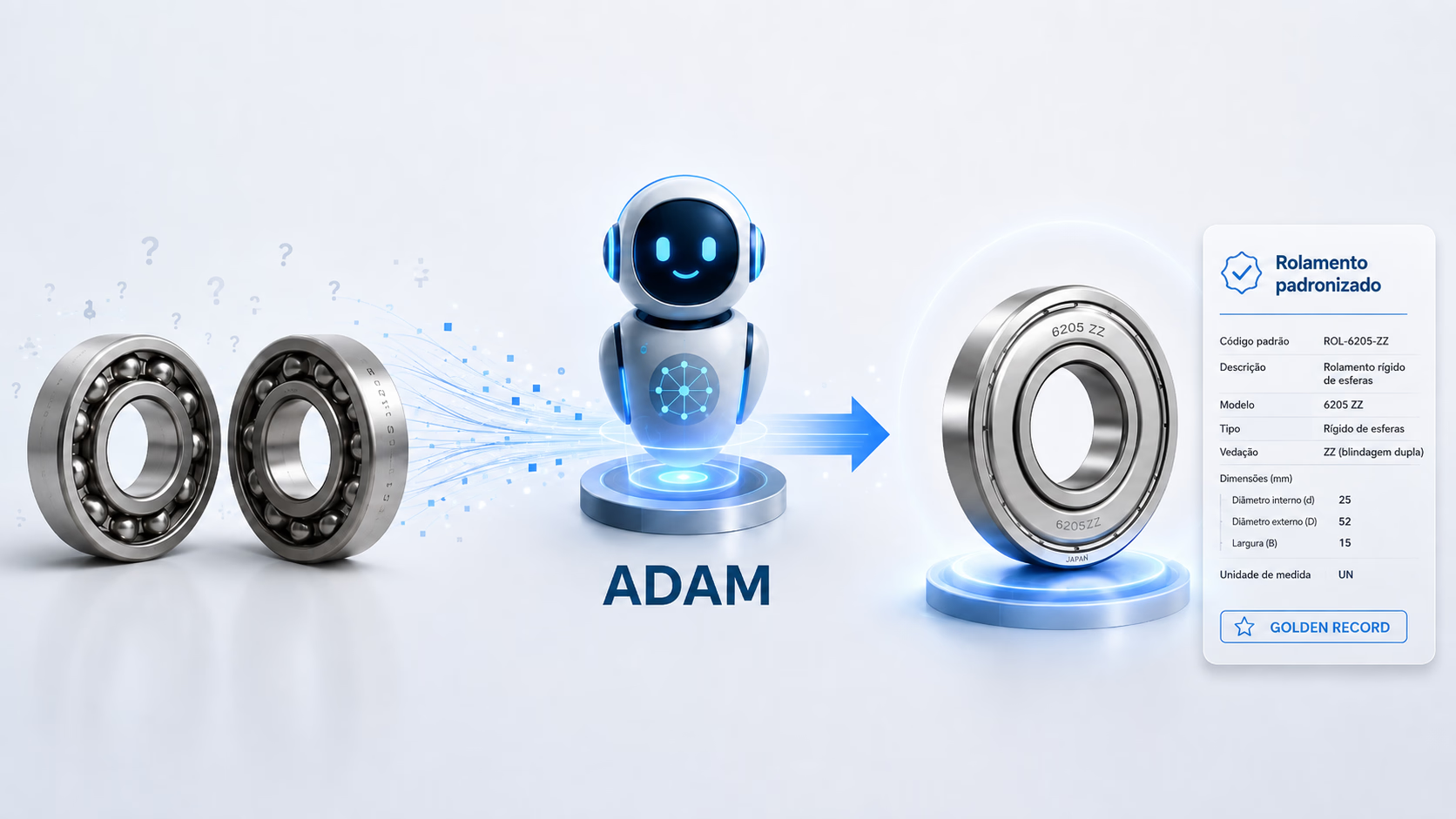
Standardizes the description automatically (PDM)
It interprets abbreviations, typos and manufacturer names, separates the characteristics into attributes and writes the short description and the long description in the standard of your taxonomy. The same item is always entered the same way, no matter who registered it.
Suggests classification
It proposes the item's tax classification based on the structured description and your base history, showing the rationale so the tax team can validate in seconds.
Suggests the UNSPSC
It places the item in the international standard for classifying materials and services. This gives you spend comparability by category across plants, countries and suppliers.
Behind the scenes of projects
The same ADAM that works for you speeds up your project delivery.
During MDM project implementation, our team uses ADAM in every phase. This shortens the timeline, reduces rework and reaches you as a more predictable project.
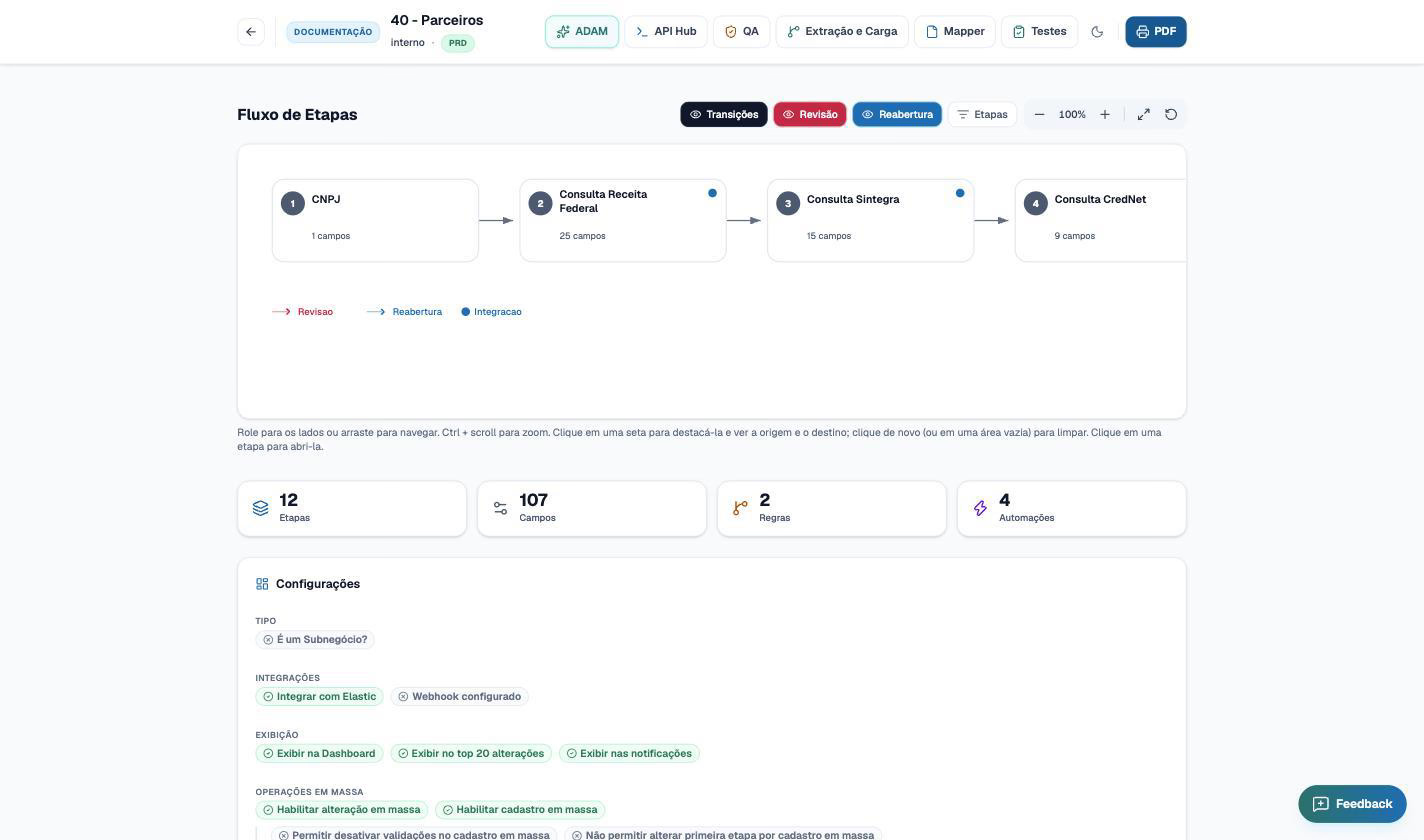
Designs the process
From interviews and client documents, ADAM builds the BPMN of the entire registration process: roles, steps, approvals and integrations. Our team validates and adjusts instead of designing from scratch.
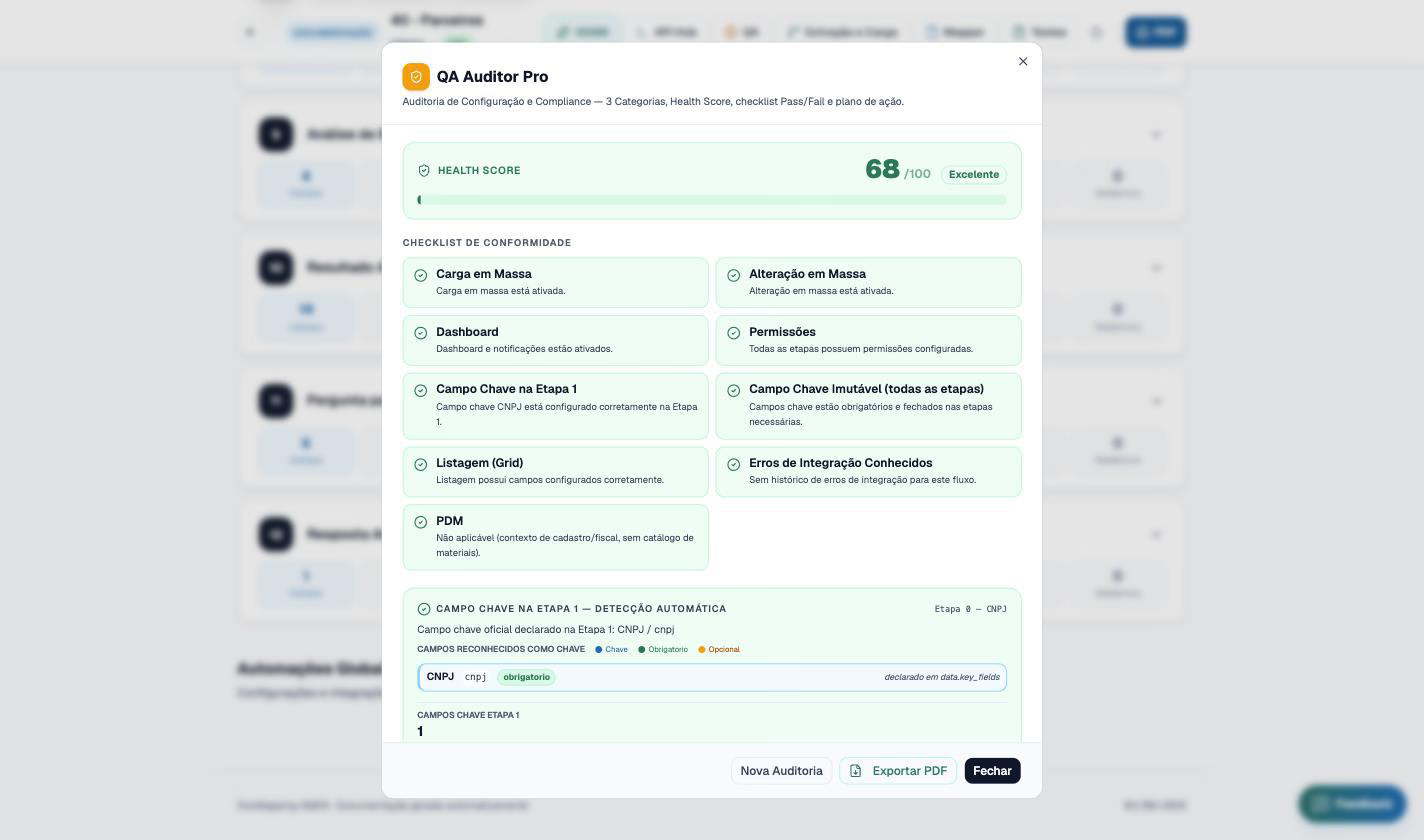
Builds the test plan
It generates scenarios and test cases from the designed process and the business rules, covering the happy paths and the exceptions that usually only appear in production.
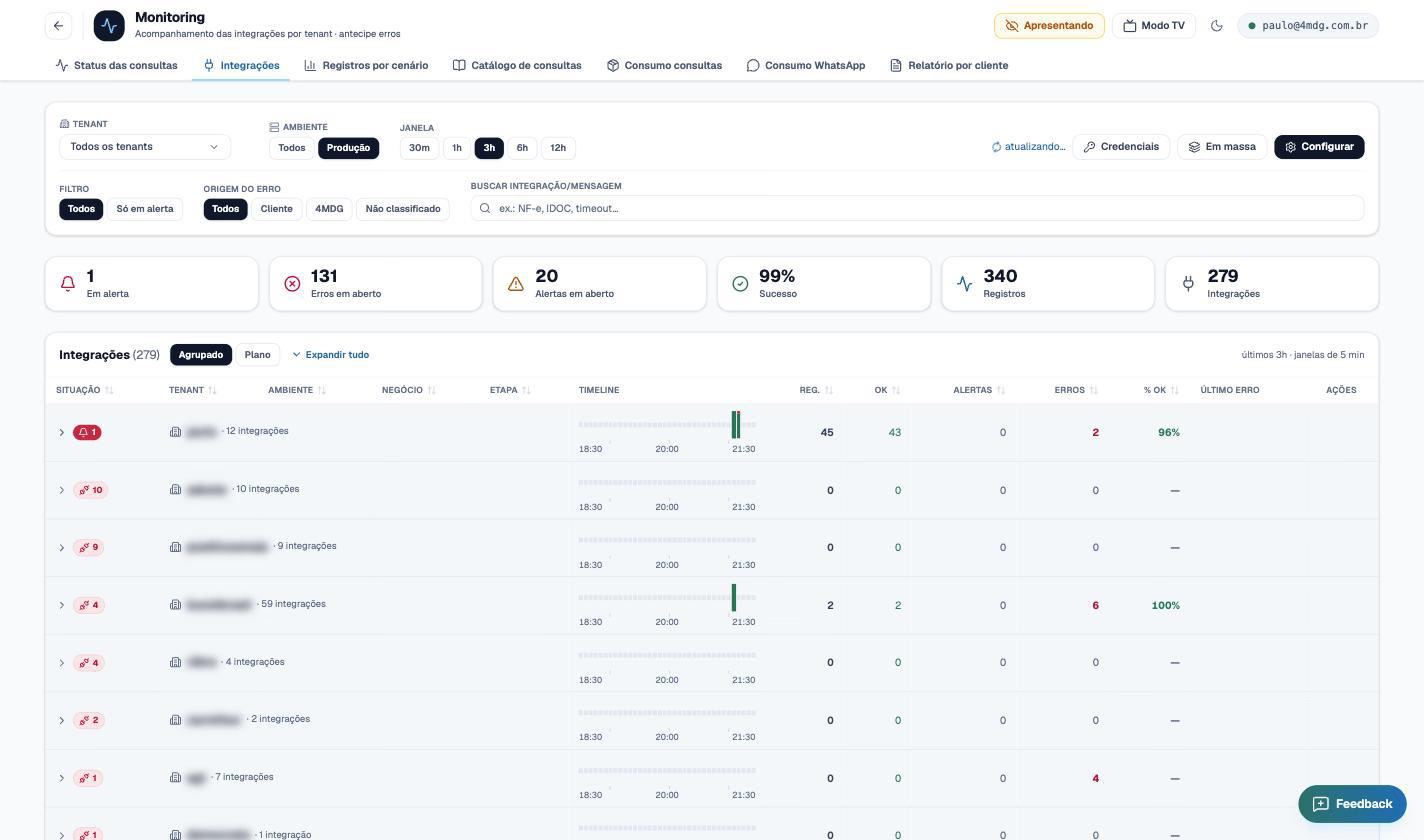
Evaluates integrations in real time
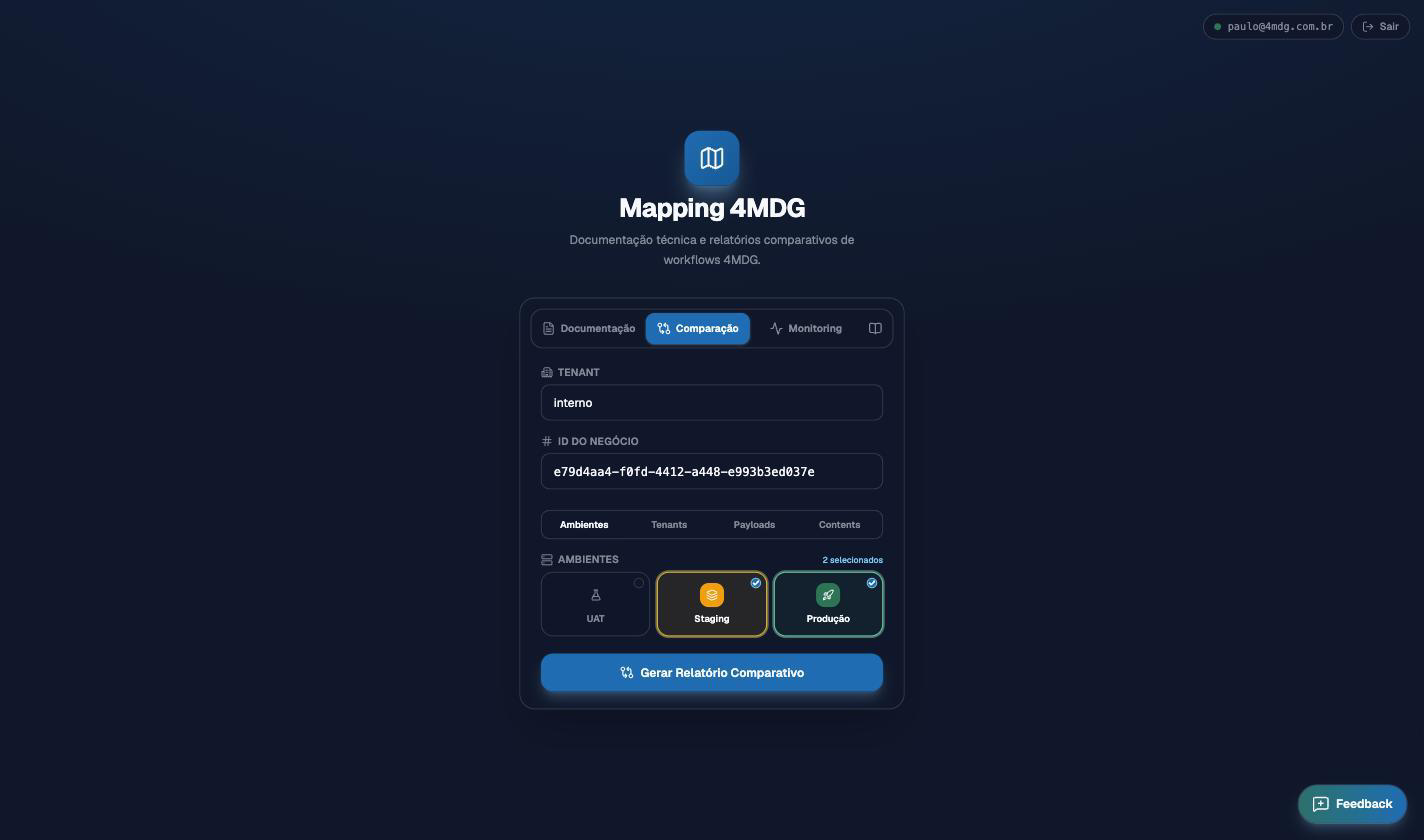
It tracks integrations with the ERP and other systems during the project, identifies errors in data and mappings the moment they happen and points to the fix, so our team resolves it quickly.
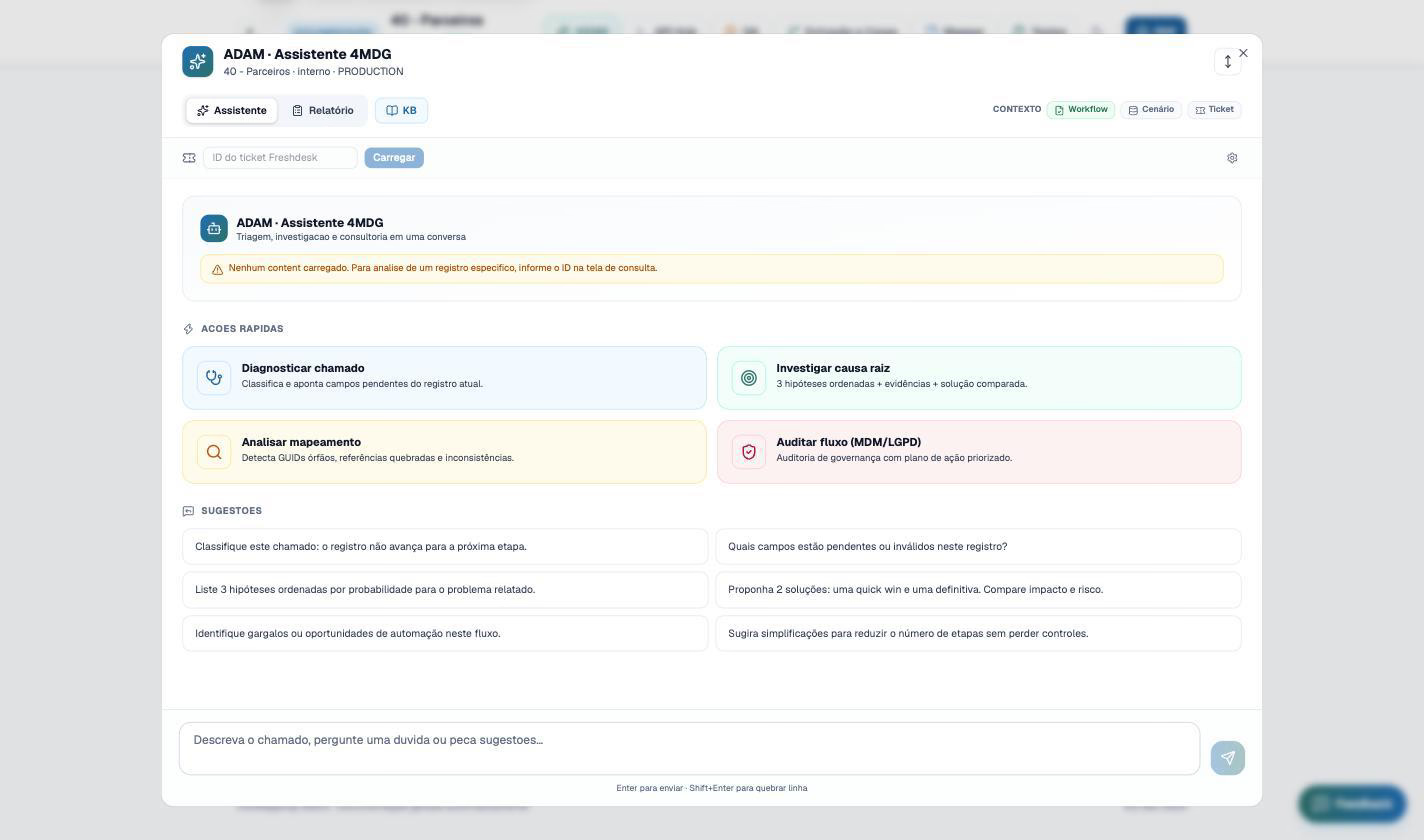
Reads and resolves support faster
It reads support requests automatically, understands the context of the record involved, classifies the problem and proposes the solution. Our analyst confirms and replies in less time.
How it works
You set the goal. ADAM works out the path.
ADAM is not a chat that returns text for someone to copy. It receives a goal, decides the steps, uses the platform's tools and delivers the work ready for review, showing where each piece of information came from.
It takes a goal, not a command
"Register this bearing for the Joinville plant" is enough. ADAM identifies the manufacturer, searches the base for similar items, builds the standard description, suggests the product classification, UNSPSC and unit of measure, and returns with the record filled in.
It uses the platform's tools
It queries public sources, your company's data dictionary, the record history and your taxonomy rules. The same tools an analyst would use, in the order the task requires.
It shows what it did
Every suggestion comes with the evidence: where the classification came from, which similar item it found, which taxonomy rule it applied. You don't have to trust blindly.
Autonomy with brakes
Research and suggestion run on their own. Anything that creates, changes or approves a record requires confirmation from a person, with a record of who authorized it.
See how ADAM decides safely →An example of the cycle
1. Request. The buyer writes: "We need to register a nitrile glove, size M, box of 100, from supplier X."
2. ADAM's work. It checks whether an identical item already exists, builds the standard description, separates the attributes (material, size, packaging), suggests the product classification and UNSPSC, locates the supplier in public registry databases and checks its approval status.
3. Proposal. The record appears complete, with each field marked as "confirmed", "suggested" or "pending".
4. Human decision. The analyst reviews, adjusts whatever they want and approves. ADAM records who approved and what was changed.
AI that shows its work, not AI in the dark.
Every ADAM suggestion is traceable: it lists which data it read to reach the result. The final decision is always human (human-in-the-loop), actions that change records require confirmation and are logged, and ADAM's behaviour follows your governance rules. All under ISO/IEC 27001 certification and in compliance with LGPD and GDPR.
Traceability of every suggestion
Each suggestion shows the context data used, so you can check the basis of the result.
Human-in-the-loop
The AI suggests; the person decides. Sensitive actions require explicit confirmation and are logged.
ISO 27001, LGPD e GDPR
ADAM operates within 4MDG's certified ISMS, aligned with DAMA-DMBOK on quality, metadata and governance.
See security and ISO 27001 →Results and proof
AI that shows up in the clock, the risk and the invoice.
160
clients served across 6 countries
321+
MDM projects delivered
127 mil
users on the platform
60 mi
records managed
“4MDG's software presented a model of automatic integration between areas and with SAP, complying with the security standards.”
Reference migration: ECC to S/4HANA
241 mil materials, 59 mil suppliers and 13 mil customers migrated with cleansed data and under governance.
AI-ready data
ADAM takes care of your data today and prepares your company for tomorrow's AI.
AI projects fail when master data is messy. By completing, standardizing and classifying records with full traceability, ADAM delivers the reliable foundation your AI and analytics strategy needs to avoid amplifying errors at scale.
Contact
Let ADAM do the heavy lifting of your master data.
Next steps: assessment of your current data, a platform demo and a proposal with scope and timelines.
We take care of all your company's master data. You take care of the business!
Av. Queiroz Filho, 1700, Torre E, Conjuntos 715 a 718
Vila Leopoldina, São Paulo, SP, 05319-000
Perguntas frequentes
Questions about ADAM
It is the AI assistant of the 4MDG platform. It fills in and completes fields, standardizes descriptions, suggests product classification and UNSPSC codes, finds customers and suppliers, supports approval and answers queries in natural language. You confirm every result.
No. It removes the repetitive work of searching, typing and classifying. The decision remains human: every record creation or change goes through confirmation, with a record of who approved it.
From the standardized description and the item attributes, cross-referencing your own database history with the official table. It shows the rationale behind the suggestion so your tax team can validate it.
Yes. It works inside the 4MDG platform, which integrates with SAP and other ERPs. The approved record goes to your system through the existing integration flow.
Yes. Each suggestion shows which data was used. ADAM operates under ISO/IEC 27001 certification and in compliance with LGPD and GDPR.
No. ADAM is part of the 4MDG platform and works across all domains: materials, services, customers and suppliers.