4MDG data sources: data straight from the source.
Over 600 public sources on individuals and companies queried automatically by the platform: Receita Federal, Simples Nacional, Sintegra, Suframa, state departments, city governments, courts, professional councils, environmental agencies and sanctions lists. The same query base supports day-to-day master data work on 4MDG's MDM (Master Data Management) platform and data cleansing projects.
160 clients trust us












Concept
What is a verification source?
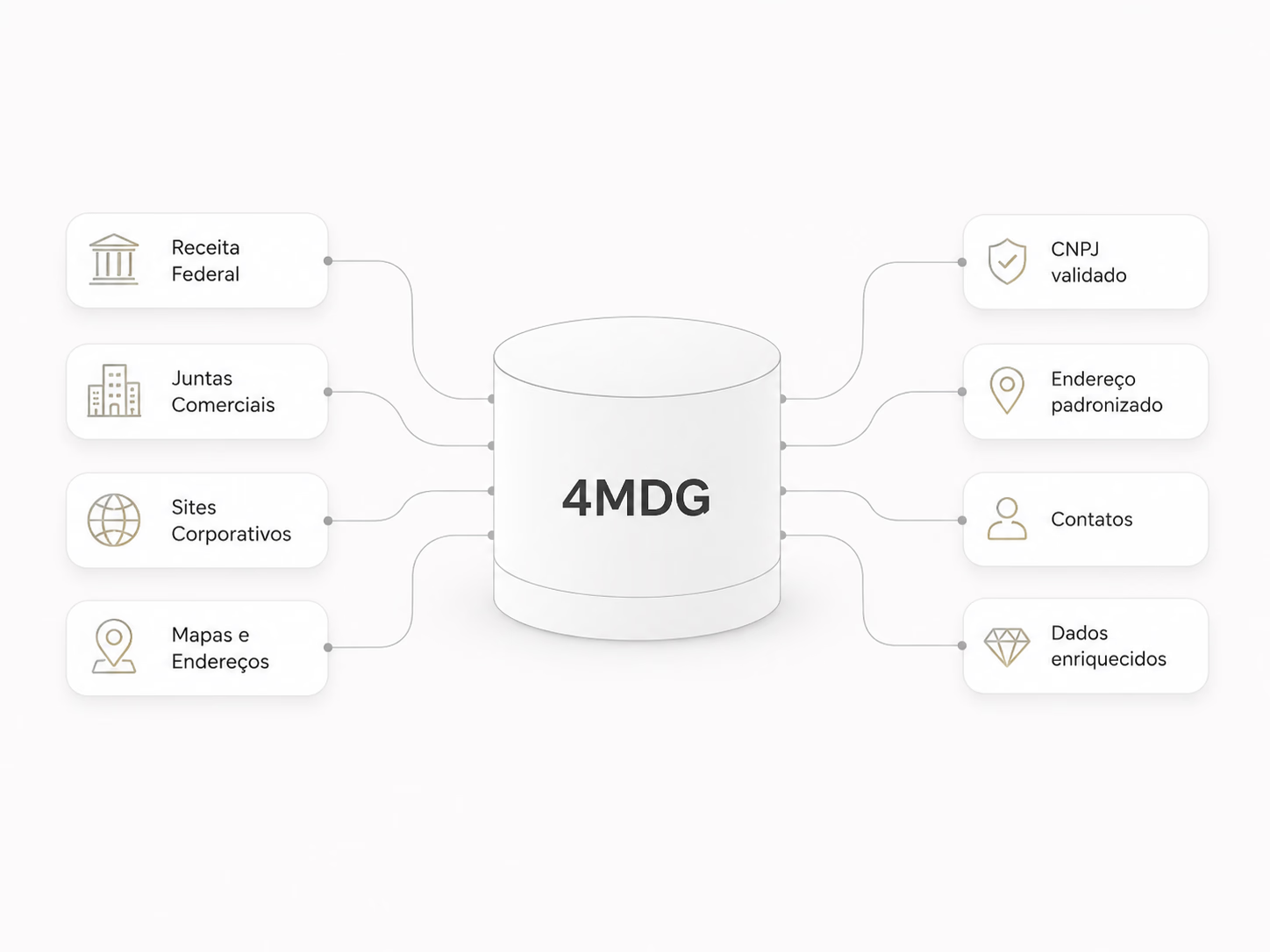
A verification source is a public information service maintained by a government body, authority, agency, court, council or institution, where you can check the existence, the status and the regularity of an individual or a company. It is the Receita Federal telling you whether the CNPJ is active, the SEFAZ telling you whether the state registration is enabled, the TST telling you whether there is a labor debt, the Portal da Transparência telling you whether the company is barred from contracting with the public sector.
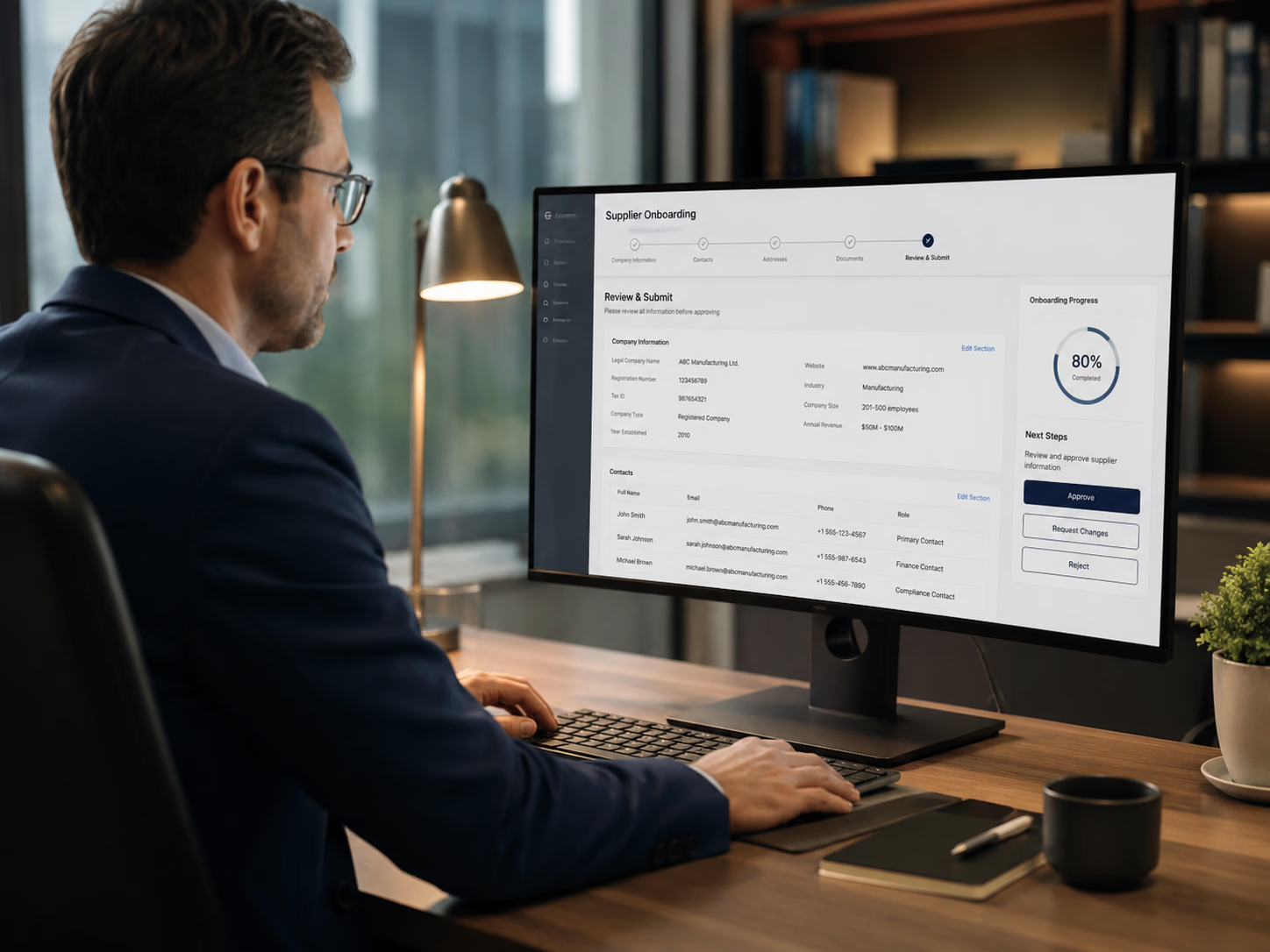
Our platform queries these sources at the origin, automatically, and brings the structured result into the record. Instead of having an analyst open dozens of websites, type in the document number and save a PDF, the verification happens inside the flow, the result is attached to the record and the evidence is stored with date and time.
Verification at the source, not in the screenshot the supplier sent
Structured result, which becomes a field, a rule and an alert in the record
Stored evidence with date, time and the source response
Scheduled re-check, because registration status changes over time
How it's used
The same source serves supplier qualification and customer onboarding.
What changes is the policy: which sources are mandatory, at which stage of the flow they run, what blocks the record and what only raises an alert for the analyst.
In supplier qualification
Existence and status of the CNPJ, ownership structure and tax classification confirmed before opening the process.
Federal, state, municipal, labor and FGTS certificates collected and automatically revalidated.
Sanctions and debarment lists, lawsuits and background records make up the integrity due diligence.
Sector licenses by category: ANVISA, ANP, ANTT, IBAMA, fire department, professional councils.
In customer onboarding
KYC and KYB from the first contact: CPF, CNPJ, registration status and ownership structure validated at the source.
State registration, Sintegra, Suframa and tax regime to issue invoices without rejection.
Address, postal code and contact data normalized before entering the ERP and the CRM.
Sanctions and restrictions checked to release credit and limits based on verified data.
Individuals and legal entities
There are sources for both sides of the record.
Company and individual appear together in the same process: the legal entity signs the contract, but the one who answers for it is the partner, the legal representative or the qualified professional. The platform checks both.
Legal entities
Who the company is and whether it can operate
Individuals
Who answers for the company or contracts with you
Two uses
In the software every day, and in batch data cleansing.
Daily use on the platform
The query runs inside the registration flow, at the stage you configured, and fills in fields automatically.
The rule decides on its own: a return outside the policy blocks progress or opens a pending task for the analyst.
Periodic jobs re-query the active base and reopen any record that has lost validity.
Data cleansing project
The entire base is enriched and checked against the public source, record by record.
Cancelled CNPJ, unfit registration, divergent company name and outdated address show up before they become a tax problem.
The result feeds deduplication and the load into the ERP during migration or rollout.
How many records in your base have a cancelled CNPJ or an unfit registration right now? The free diagnosis answers that by querying the public source.
Get the free diagnosisUse cases
Where sources and OCR fit into your process.
The combination is always the same: the uploaded document is read by OCR, the extracted data becomes registration fields, and public sources confirm whether it is true. Only who is on the other side changes.
Suppliers
Onboarding, qualification and approval
Supplier due diligence
Supplier monitoring
Employees and third parties
Background checks
Employee due diligence
Approval and monitoring of outsourced workers
Vehicle and driver verification
Customers and users
Onboarding
Risk assessment
Credit analysis
Anti-fraud
Compliance status monitoring
Financial transactions
Integrity and AML monitoring
Financial transaction monitoring
Reputation and adverse media
Reputational risk does not show up in a certificate. The adverse media search scans news, publications and public records for negative mentions of the CNPJ, the partner or the legal representative: fraud, corruption, slavery-like labour, environmental damage, high-profile lawsuits and involvement in investigative operations. The result goes into the dossier alongside sanctions, lawsuits and background records, and periodic re-checks alert you when something new is published about a third party already approved.
Document OCR
The document you send also becomes data.
Beyond the lookups, the platform reads images and PDFs via OCR and extracts the fields straight into the record. There is OCR for the main Brazilian documents, such as CNH, RG, CPF, CRLV, proof of address, service invoices and income tax returns, among others. What OCR extracts is immediately checked against the corresponding public source.
Documents read by OCR
CNH (Brazilian driver's license)
RG and identification documents
CRLV (vehicle registration and licensing)
Income tax return (individuals)
Service invoice (SP, RJ, BA, PE, MG, RS)
Electricity bills: CEMIG, CPFL, Enel, Light
Electricity bills: Energisa, Neoenergia, Elektro, RGE
Consumption statement
Proof of address
Certificates and articles of association
QR code reader
Other documents under evaluation
Source and OCR working together
1. The supplier, customer or third party sends the document through the portal.
2. OCR reads the document and fills in the record fields, with no retyping.
3. Public sources confirm what was extracted and flag any divergence between the document and the official record.
4. The rule decides: approve, raise a pending item or block, with the evidence stored.
Catalog
The available queries.
An overview of the main Brazilian public sources currently available for use in the platform's workflows and in data cleansing projects. We also query public sources from other countries, such as Argentina, Chile, Mexico and Colombia. New sources are added as agencies make access available.
325 queries across 12 categories
Receita Federal / CNPJ
Receita Federal / CPF
Receita Federal / Simples Nacional
Receita Federal / MEI
Receita Federal / SIMEI (Annual return)
Receita Federal / Simples (DASN SIMEI)
Receita Federal / Simples (MEI DAS issuance)
Receita Federal / Tax status
Receita Federal / PGFN (Federal CND)
Receita Federal / PGFN (Federal CND) - New
Receita Federal / PGFN (Federal CND) - Duplicate
Receita Federal / PGFN / Debtors list
Receita Federal / Cafir
Receita Federal / NIRF
Receita Federal / Radar (Foreign trade authorization)
Receita Federal / Tax calendar
Receita Federal / Payment receipt
Receita Federal / SICALC / Generate DARF
Receita Federal / PER/DCOMP
Receita Federal / IRPF
Receita Federal / NFE
Receita Federal / NFS-e
Receita Federal / NFS-e / Issued invoices
Receita Federal / NFS-e / Received invoices
Receita Federal / CTe
Receita Federal / Legal Surcharge System (SAL) / Registration data
ECAC / Mailbox
ECAC / DCTF WEB
ECAC / PER/DCOMP
Comprot / Case
CARF / Case
SEFAZ / State debt clearance certificate (unified)
SEFAZ / Centralized Taxpayer Registry (CCC)
SEFAZ / AC / Debt clearance certificate
SEFAZ / AL / Debt clearance certificate
SEFAZ / AM / Debt clearance certificate
SEFAZ / AM / Debt clearance certificate (Digital certificate)
SEFAZ / AP / Debt clearance certificate
SEFAZ / BA / Debt clearance certificate
SEFAZ / CE / Debt clearance certificate
SEFAZ / CE / Certificate of good standing
SEFAZ / DF / Debt clearance certificate
SEFAZ / DF / Active debt certificate
SEFAZ / ES / Debt clearance certificate
SEFAZ / GO / Debt clearance certificate
SEFAZ / GO / Rural producer
SEFAZ / MA / Debt clearance certificate
SEFAZ / MA / Active debt certificate
SEFAZ / MG / Debt clearance certificate
SEFAZ / MG / Active debt
SEFAZ / MG / CADIN
SEFAZ / MG / Installment plan query
SEFAZ / MG / Protest of active debt entry
SEFAZ / MS / Debt clearance certificate
SEFAZ / MT / Debt clearance certificate
SEFAZ / MT / Debt clearance certificate reprint
SEFAZ / MT / Accreditation query
SEFAZ / PA / Debt clearance certificate
SEFAZ / PB / Debt clearance certificate
SEFAZ / PE / Debt clearance certificate
SEFAZ / PE / Tax compliance certificate
SEFAZ / PE / Active debt
SEFAZ / PI / Debt clearance certificate
SEFAZ / PI / Active debt clearance certificate (CNDA)
SEFAZ / PR / Debt clearance certificate
SEFAZ / PR / Active debt
SEFAZ / PR / CADIN
SEFAZ / RJ / Debt clearance certificate
SEFAZ / RN / Debt clearance certificate
SEFAZ / RO / Debt clearance certificate
SEFAZ / RR / Debt clearance certificate
SEFAZ / RS / Debt clearance certificate
SEFAZ / SC / Debt clearance certificate
SEFAZ / SE / Debt clearance certificate
SEFAZ / SP / Debt clearance certificate
SEFAZ / TO / Debt clearance certificate
SEFAZ / DEC / Mailbox (AL, CE, ES, GO, MA, MG, MS, MT, PA, PE, PR)
SEFAZ / NFE (Unified)
SEFAZ / NFC-e (Unified)
SEFAZ / NFC-e by state
State Attorney General's Office / BA / Active debt
State Attorney General's Office / CE / Active debt
State Attorney General's Office / MT / Active debt
State Attorney General's Office / RJ / Active debt
State Attorney General's Office / SP / Active debt
State Attorney General's Office / SP / Tax debt clearance certificate
SINTEGRA / Unified
SINTEGRA / SUFRAMA
SINTEGRA / AC
SINTEGRA / AL
SINTEGRA / AM
SINTEGRA / AP
SINTEGRA / BA
SINTEGRA / CE
SINTEGRA / DF
SINTEGRA / ES
SINTEGRA / GO
SINTEGRA / MA
SINTEGRA / MG
SINTEGRA / MS
SINTEGRA / MT
SINTEGRA / PA
SINTEGRA / PB
SINTEGRA / PE
SINTEGRA / PI
SINTEGRA / PR
SINTEGRA / RJ
SINTEGRA / RN
SINTEGRA / RO
SINTEGRA / RR
SINTEGRA / RS
SINTEGRA / SC
SINTEGRA / SE
SINTEGRA / SP
SINTEGRA / TO
Municipality / CPOM (unified)
Municipality / SP / São Paulo / Business tax certificate
Municipality / SP / São Paulo / IPTU tax certificate
Municipality / SP / São Paulo / CCM
Municipality / SP / São Paulo / CADIN
Municipality / SP / São Paulo / Active debt
Municipality / SP / São Paulo / CPOM
Municipality / SP / São Paulo / NFS-e
Municipality / SP / Campinas / Debt clearance certificate
Municipality / SP / Campinas / CPOM
Municipality / SP / Guarulhos / Debt clearance certificate
Municipality / SP / Guarulhos / Business debt clearance certificate
Municipality / SP / Osasco / Company tax certificate
Municipality / SP / Ribeirão Preto / Debt clearance certificate
Municipality / SP / São Bernardo do Campo / Debt clearance certificate
Municipality / SP / Sorocaba / Debt clearance certificate
Municipality / SP / Mogi das Cruzes / Debt clearance certificate
Municipality / SP / Hortolândia / Debt clearance certificate
Municipality / SP / Jundiaí / IPTU tax certificate
Municipality / RJ / Rio de Janeiro / Debt clearance certificate
Municipality / RJ / Rio de Janeiro / IPTU tax certificate
Municipality / RJ / Rio de Janeiro / NFS-e
Municipality / RJ / Duque de Caxias / Debt clearance certificate
Municipality / MG / Belo Horizonte / Debt clearance certificate
Municipality / MG / Contagem / Debt clearance certificate
Municipality / MG / Betim / Debt clearance certificate
Municipality / MG / Uberlândia / Debt clearance certificate
Municipality / MG / Uberaba / Debt clearance certificate
Municipality / MG / Montes Claros / Debt clearance certificate
Municipality / PR / Curitiba / Debt clearance certificate
Municipality / PR / Maringá / Debt clearance certificate
Municipality / RS / Porto Alegre / Debt clearance certificate
Municipality / RS / Porto Alegre / ISSQN registration proof
Municipality / RS / Caxias do Sul / Debt clearance certificate
Municipality / SC / Joinville / Debt clearance certificate
Municipality / SC / Florianópolis / Debt clearance certificate
Municipality / SC / Blumenau / Debt clearance certificate
Municipality / SC / Itajaí / Debt clearance certificate
Municipality / BA / Salvador / Debt clearance certificate
Municipality / BA / Camaçari / Debt clearance certificate
Municipality / PE / Recife / Debt clearance certificate
Municipality / PE / Recife / CPOM
Municipality / CE / Fortaleza / Debt clearance certificate
Municipality / CE / Fortaleza / CPOM
Municipality / GO / Goiânia / Debt clearance certificate
Municipality / GO / Anápolis / Debt clearance certificate
Municipality / MT / Cuiabá / Debt clearance certificate
Municipality / MS / Campo Grande / NFS-e
Municipality / MA / São Luís / Debt clearance certificate
Municipality / RN / Natal / Debt clearance certificate
Municipality / TO / Palmas / Debt clearance certificate
Municipality / AP / Macapá / Debt clearance certificate
and other municipalities covered
Caixa / Employer compliance (FGTS)
FGTS / Payment slip
FGTS / Quick slip issuance
Court / TST / CNDT
Court / TST / CNDT validation
MTE / Labor debt certificate
MTE / Cases by employer
MTE / Pay transparency report
Labor Inspection Secretariat / CAEPI
Labor Inspection Secretariat / Slave labor
Dataprev / Accident Prevention Factor (FAP)
MPT / Clearance certificate of proceedings (Unified)
MPT / Clearance certificate of proceedings by region
Transparency Portal / Registry of Disreputable and Suspended Companies (CEIS)
Transparency Portal / National Registry of Punished Companies (CNEP)
Transparency Portal / Registry of Barred Nonprofit Private Entities (CEPIM)
Transparency Portal / Registry of Dismissals from Federal Administration (CEAF)
Transparency Portal / Leniency agreements
Transparency Portal / Public servant
Transparency Portal / Agreements and partnerships
Transparency Portal / Fund transfers
Transparency Portal / Search
Office of the Comptroller General / Disciplinary clearance - Private entities
Office of the Comptroller General / Disciplinary clearance - Public agents
National Council of Justice / Administrative misconduct and ineligibility
National Council of Justice / Arrest warrants
National Council of Justice / SEEU / Cases
OFAC / Sanctions
UN / Sanctions
ICIJ / Offshore Leaks Database
Criminal record / Federal Police / Issue
Criminal record / Federal Police / Validate
Criminal record / SP
Criminal record / MG
MPF / Clearance certificate
MPF / Cases
MPF / Amazônia Protege
Public Prosecutor's Office / SP / Civil inquiry
CADE / Cases
CVM / Participant
CVM / Administrative sanction proceedings
CVM / Judged sanction proceedings
Commercial Registry / SP / Simplified certificate
Commercial Registry / SP / Full registration record
Commercial Registry / SP / Simplified registration record
Commercial Registry / SP / NIRE (Advanced search)
Commercial Registry / SP / NIRE by partner
Commercial Registry / SP / Document list
Commercial Registry / SP / Document download
Commercial Registry / SP / REDESIM / Protocol tracking
Commercial Registry / SP / Public licensing query
Registrars (ARISP) / Property record / New viewing request
Registrars (ARISP) / Property record / Record download
Registrars (ARISP) / Certificate / New digital certificate request
Registrars (ARISP) / Certificate / Digital certificate download
ONR / Property registry map
Civil Registry / Validate electronic certificate
INPI / Trademarks
INPI / Trademarks by CPF/CNPJ
INPI / Patents
INPI / Trademark registration case
B3 / Participants
Central Bank of Brazil (BCB) / Amounts receivable
ANVISA / Brazilian company operating license
ANVISA / Case
ANVISA / Electronic leaflet database
ANP / Fuel stations
ANP / LPG resellers
ANP / Distribution terminals
ANP / SIMP facilities
ANATEL / Legal phone query
ANTT / Carrier
ANTT / Vehicle
ANTT / International Road Freight Transport (TRIC)
ANTT / Hazardous goods
ANTT / SIFAMA / Check fines
ANTT / SIFAMA / Infraction notice list
ANTT / Calculate minimum freight floor
INMETRO / Tachograph
INMETRO / Instruments / Tank vehicles
Federal Police / Status and compliance of private security company
Military Police / SP / Fire department licenses (CLCB, AVCB and TAACB)
Fire Department / RJ / Fire tax
Cadastur / Providers
MPA / PesqBrasil
MDA / SEAD / PRONAF eligibility declaration (DAP)
Federal Council of Accounting / Registry of professionals and firms
Federal Council of Medicine / Registry
Federal Council of Medicine / Health facilities
Federal Council of Veterinary Medicine / Registry
Federal Council of Pharmacy / Registry
Federal Council of Psychology / Registry
Federal Council of Biomedicine / Registry
Regional Council of Nursing / PR / Registry
Regional Council of Nursing / SP / Registry
Regional Council of Pharmacy / SP / Registry
Regional Council of Pharmacy / GO / Registry
Regional Council of Dentistry / Registry (unified)
Regional Council of Dentistry / Registry by state
CRCP / Professional Certificate Registry Center
IBAMA / Compliance certificate
IBAMA / Debt certificate
IBAMA / Embargo certificate (No record)
IBAMA / Environmental infractions
Rural Environmental Registry / Property
Rural Environmental Registry / Statement
Rural Environmental Registry / Statement (PDF)
Rural Environmental Registry / Shapefile download
INCRA / SIGEF / Parcels
INCRA / SIGEF / Parcel details
INCRA / SIGEF / Survey plan
INCRA / SIGEF / Applications
INCRA / Coordinate provider
IBGE / Municipality code
IBGE / Brazilian territorial area
DETRAN / Restrictions (Unified)
DETRAN / Vehicle by state
DETRAN / Debts and fines by state
DETRAN / Licensing and CRLV by state
DETRAN / Lien
DETRAN / License and points
DETRAN / No record
ECRVSP / Vehicles / BIN RENAVAM registry
ECRVSP / Vehicles / Liens
ECRVSP / Restrictions / RENAJUD judicial blocks
ECRVSP / Restrictions / Active DETRAN blocks
ECRVSP / ATPV (Intent to sell)
ECRVSP / RENAINF fines / By plate
DNIT / Infractions
DNIT / Infractions (CNPJ)
DNIT / Offending driver identification
Federal Highway Police / Debts
Federal Highway Police / Infractions
DPRF / No record
DER / SP / Fines and appeals
DER / PR / Debt clearance certificate
DER / BA / No record
DPVAT / Slip issuance
Vehicle reports / DEKRA / ECV
Vehicle reports / DEKRA / LCD
Tolls / Pedágio Digital
Correios / Postal code
Correios / Postal code lookup
Correios / Tracking
Correios / Special delivery
Bills / CEMIG / Download and OCR
Bills / CPFL / Download and OCR
Bills / Enel / SP / Download and OCR
Bills / Enel / RJ / Download and OCR
Bills / Enel / CE / Download
Bills / Light / Download and OCR
Bills / Neoenergia (Elektro) / Download and OCR
Bills / Comgás / Duplicate copy download
Bills / SABESP / Bill download
Bills / SABESP / Installation list
OCR / Income tax (Individual return)
Search engine / Google
Outside Brazil too
Beyond Brazilian sources, we query public records in other Latin American countries and in other regions, for companies that buy from, sell to or operate with third parties abroad. Tax identification, registration status, corporate registry and international sanctions lists all enter the same due diligence workflow.
There are more queries than the ones listed here
The catalog covers the most used sources, but it is not the complete list: there are specific queries by state, municipality, sector agency and use case that are not on this page. If you did not find the source your process requires, talk to our specialists. We assess availability and enable the query in your workflow.
Contact
Which sources does your process need to check?
We assemble the set of queries and OCR by type of supplier, customer or third party, and show you the result in your own database. No commitment.
Av. Queiroz Filho, 1700, Torre E, Conjuntos 715 a 718
Vila Leopoldina, São Paulo, SP, 05319-000
Important notice
The sources listed on this page are public and maintained by government bodies, institutes, organizations, agencies and public authorities. We do not control these services and cannot guarantee the availability, continuity, response time or integrity of the information returned. Access, data format and query rules may be changed, suspended or discontinued by these entities at any time, without prior notice, which may affect the execution of specific queries. The list above is indicative and may vary over time.