SAP RETAIL: How to optimize registrations in a retail operation?
Master data management, or MDM, is essential for companies seeking to optimize their operations and improve…
Master data management, or MDM, is essential for companies seeking to optimize their operations and improve the quality of their information.
In retail, in particular, tackling registration challenges can be a significant competitive differentiator. This article explores how MDM transforms the retail environment, improving data efficiency and accuracy.
SAP IS-Retail: how does it work?
SAP Retail is a comprehensive ERP (Enterprise Resource Planning) solution designed specifically to meet the needs of the retail sector. This system offers a wide range of functionalities that help retailers manage their operations efficiently, from the supply chain to customer relationships. One of the most critical and complex aspects of SAP Retail is material master data management, which includes processes such as assortment, mix and product cataloging.
Material master data management in SAP Retail involves creating and maintaining detailed information about each item a company sells. This process is complex due to the need for accuracy and detail in product information, which includes descriptions, technical specifications, supplier information, prices and logistics data.
Why Is Registration in Retail So Challenging?
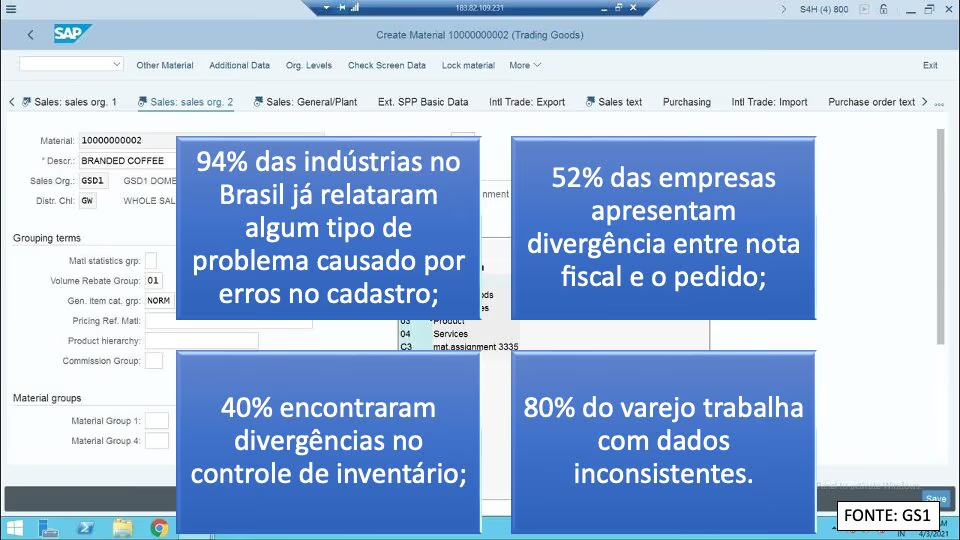
Registration processes in retail are complex due to the high volume of data, excessive attributes, limited use of technology, non-standardized processes and lack of engagement from those involved. These challenges result in significant problems, such as discrepancies between invoices and orders, inventory errors and inconsistent data, affecting 80% of the retail sector.
What is master data?
Master data is central, consistent information that supports business operations and decisions within an organization.
1. Product Data
Includes detailed information about each item sold, such as descriptions, specifications, prices, supplier information, SKU, categories and images. For example, the master data for a smartphone would include its model, technical characteristics, price, supplier and categories such as electronics.
2. Customer Data
Covers information about customers, such as name, address, preferences, contact details and segmentation. In retail, this makes it possible to personalize the shopping experience, optimize marketing and improve customer service.
3. Supplier Data
Includes details about a company's suppliers, such as names, contact information and payment terms. This data helps manage relationships and supply chain efficiency.
4. Location Data
Refers to information about physical and geographic locations, such as stores, distribution centers and offices. This includes addresses, store managers, site-specific characteristics and inventory capacity.
What is master data management applied to retail?
Master Data Management (MDM) in retail is a critical discipline that focuses on creating a single, reliable source of fundamental information about products, customers, suppliers and other essential data that supports business processes.
In the retail sector, where information accuracy is vital for efficient operations across multiple locations and sales channels, MDM plays a central role in ensuring data consistency and accuracy throughout the entire company.
The Crucial Role of MDM Software.
MDM software centralizes, organizes and manages a company's master data, such as customer, supplier and product information.
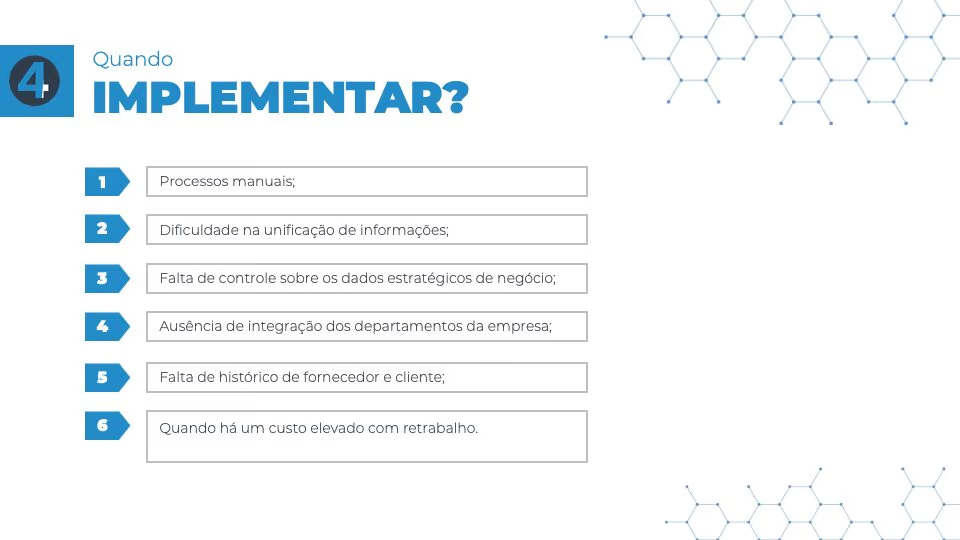
This centralization is crucial to overcoming the typical barriers of data management in retail, such as manual processes and lack of integration between departments. With MDM, companies can avoid rework and improve control over their strategic data.
When should you implement MDM software?
A retail company should consider implementing Master Data Management (MDM) software when it faces the following challenges and needs:
- Growth and expansion;
- Data inconsistency;
- The need to personalize and improve the customer experience;
- Complexity in inventory and supply chain management;
- Compliance and regulation;
- System integrations following mergers or acquisitions.
Implementing MDM Successfully
Effective MDM implementation involves several important steps:
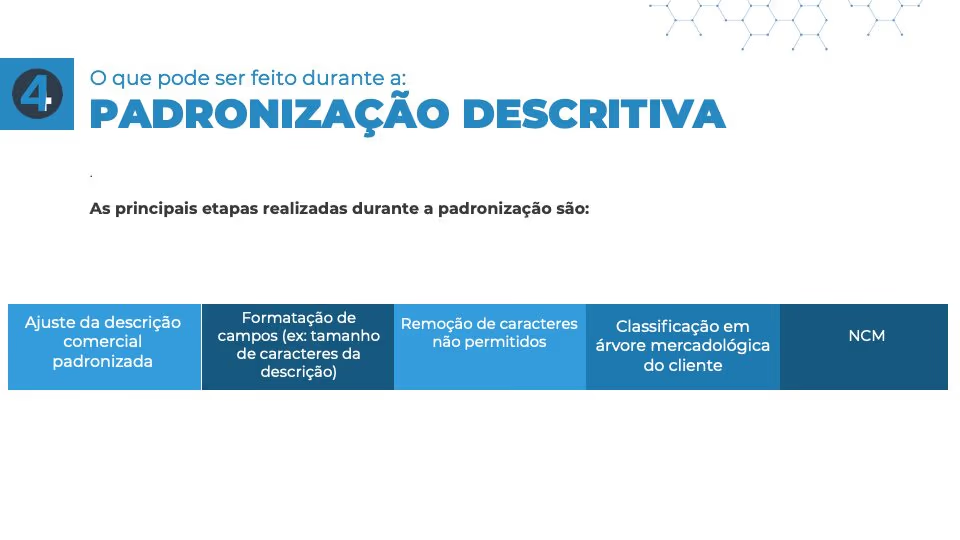
- Descriptive Standardization: Establish standard formats for descriptions and data, ensuring consistency and accuracy.
- Data Enrichment: Supplement records with additional data from reliable sources to improve the quality and usefulness of the information.
- Merchandise Classification: Organize products into clear, logical categories that facilitate analysis and strategic decisions.
- ERP Integration: Synchronize MDM with enterprise resource planning systems so that all information is up to date and accessible.
Tangible Benefits of MDM.
Companies that implement MDM solutions report significant improvements, such as automated onboarding processes, fewer errors, shorter registration times, and greater data security and reliability. For example, one successful implementation reduced supplier approval time from one hour to just ten minutes.
How can MDM support retail?
4MDG supports retailers using SAP by offering a comprehensive solution for master data management.
By integrating 4MDG with the SAP system, retailers can ensure data quality, consistency and integrity across their entire organization. This means retailers can avoid data errors and inconsistencies, improve operational efficiency and make better-informed decisions based on reliable data.
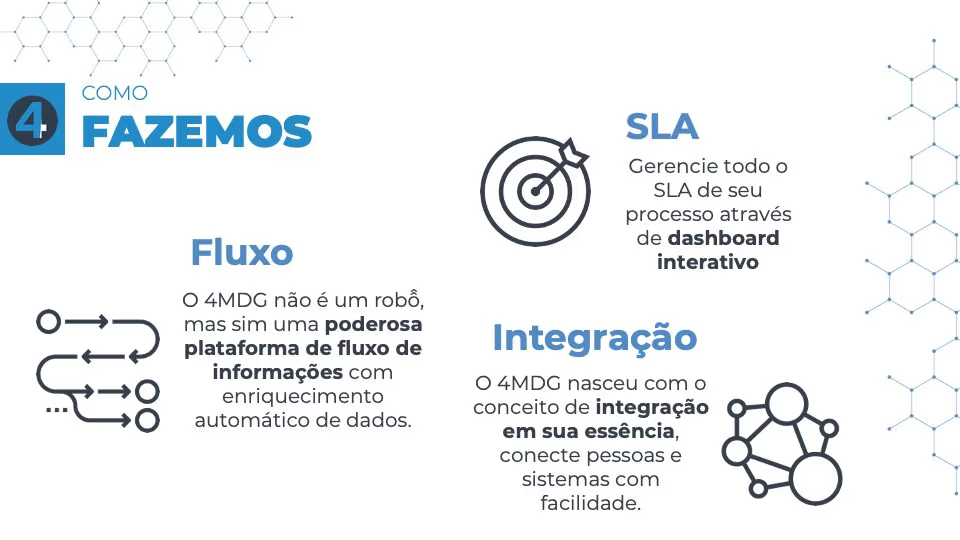
In addition, 4MDG offers advanced data automation and governance capabilities, helping retailers simplify and optimize their data management processes. In short, 4MDG can help retailers maximize the value of their data and achieve better results with their SAP system.
What are the main features of 4MDG?
4MDG has several technical features that make it a robust and effective solution for master data management. Some of these features include:
- Scalable architecture: 4MDG is built on a scalable architecture that can handle large volumes of data and support business growth over time.
- Integration with existing systems: It can be easily integrated with other business systems, such as ERP, CRM and legacy systems, ensuring interoperability and data consistency across the organization.
- Automation capabilities: 4MDG offers advanced automation features to simplify and speed up data management processes, reducing the need for manual intervention and minimizing human error.
- Data governance: It includes robust data governance capabilities to ensure data quality, consistency, security and compliance across the organization, helping protect data against unauthorized access and ensuring its accuracy and integrity.
- Data analytics: It offers advanced data analytics capabilities that allow users to gain valuable insights from their data, making it easier to take informed, strategic decisions.
Conclusion.
Implementing an effective master data management system in retail is not just an operational necessity, but a competitive advantage that allows companies to operate more efficiently, respond faster to market changes and improve the customer experience.